What is a panel tank or roof tank?
A panel tank is a modular tank assembled from FRP panels at the project site. The knockdown system simplifies delivery through narrow access routes or to high-rise areas, while the panel configuration can be adjusted to the required volume and available space.
Determine the required capacity
Start with the tank purpose: clean water, process water, fire reserve, or another use. Record users, daily usage patterns, peak periods, refill schedule, pump capacity, and reserve needs. This helps distinguish effective volume from free space and other operational requirements.
Check the site and supporting structure
For rooftop installation, have the supporting structure checked by the responsible qualified party before deciding the tank size and position. Check the filled load, support, installation access, panel delivery route, wind, vibration, and the risk of leakage to areas below. For ground installation, check levelness and the readiness of the foundation or platform.
Match dimensions to the available space
Measure length, width, clear height, access routes, and working space around the tank. Do not measure only the empty footprint; allow room for the manhole, ladder, pipe connections, panel inspection, and maintenance. A vertical or horizontal arrangement can be considered based on height and floor area.
Select connections and accessories
Define the positions of the inlet, outlet, overflow, drain, vent, manhole, internal ladder, and external ladder according to the pipe layout and operator needs. Agreeing on connection positions early reduces site changes and helps ensure inspection space is not blocked by the building structure or other equipment.
Rooftop and ground-level installation
A rooftop tank requires attention to structure, safe access, waterproofing protection, overflow routing, and serviceability. A ground-level tank is usually easier to access, but still needs a foundation, drainage, impact protection, and inspection space. The location should follow project conditions, not only the preferred tank shape.
Post-installation checks
Before use, inspect the panel joints, seals, manhole, piping, overflow, drain, and level indicator. Fill the tank gradually while monitoring leaks, movement, the support condition, and pump or float operation. Keep configuration drawings and inspection notes to make future maintenance easier.
Quotation data checklist
Prepare the tank purpose, required volume, available dimensions, installation location, plans or access photos, elevations, liquid type, connection positions, ladder or manhole needs, and target delivery date. Complete information allows the panel configuration and estimated work to be discussed more accurately.
Have a technical question about your project?
Consult via WhatsApp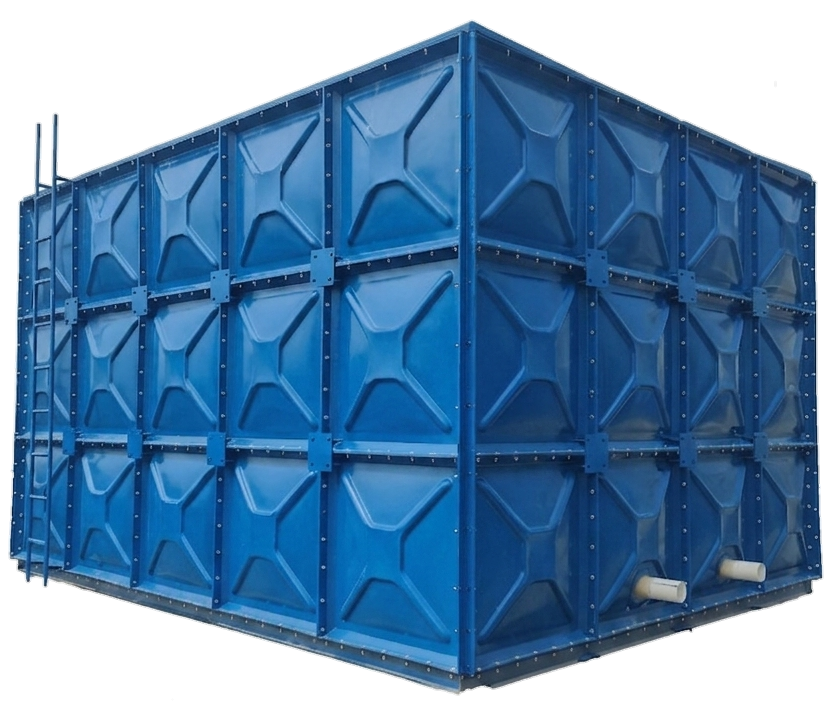 Panel Tank / Roof Tank