Map kitchen activities
Record the business type, meal count, operating hours, menu, oil use, washing activities, and number of shifts. Fast-food restaurants, hotels, bakeries, caterers, and food courts can produce different grease loads, so their units should not be treated as identical.
Count discharge points
Identify the kitchen sink, dishwasher, floor drains, pot-washing area, and other lines connected to the grease trap. Record pipe sizes, estimated flow, and whether all points operate at the same time. This is more useful than stating only the seat count or kitchen area.
Account for peak load
Consider meal periods, hotel events, weekends, breakfast service, and high-flow washing periods. The size should provide practical operating room without making cleaning impractical. Where available, use water-meter data or operating records to test the assumptions.
Choose a maintainable location
The grease trap should be near the grease source while remaining easy to open, inspect, and clean. Avoid locations blocked by permanent equipment or difficult for service staff to reach. Keep rainwater out and provide suitable ventilation and drainage.
Box or capsule model
Box and capsule models can be considered based on available space, pipe direction, installation depth, manhole access, and the cleaning method. Shape is not the only factor; effective volume, baffles, connections, and operator access should be reviewed together.
Plan the cleaning method
Decide who will check the grease layer, how the cover will be opened, where collected waste will go, and how often records will be made. Even a well-sized grease trap can fail if grease is allowed to accumulate or the waste is returned to the drain.
Signs the size or routing needs review
Slow flow, odors, pooling, grease at the outlet, a difficult cover, or an unusually frequent cleaning schedule are signs to review the size, piping, baffles, and kitchen practices. Pumping more often does not always solve the root problem.
Grease trap quotation checklist
Share the business type, meal count, operating hours, main menu, number of discharge points, pipe sizes, estimated flow, site photos and dimensions, preferred model, and cleaning access. The team can use this data to help select a suitable FRP model and prepare a quotation.
Have a technical question about your project?
Consult via WhatsApp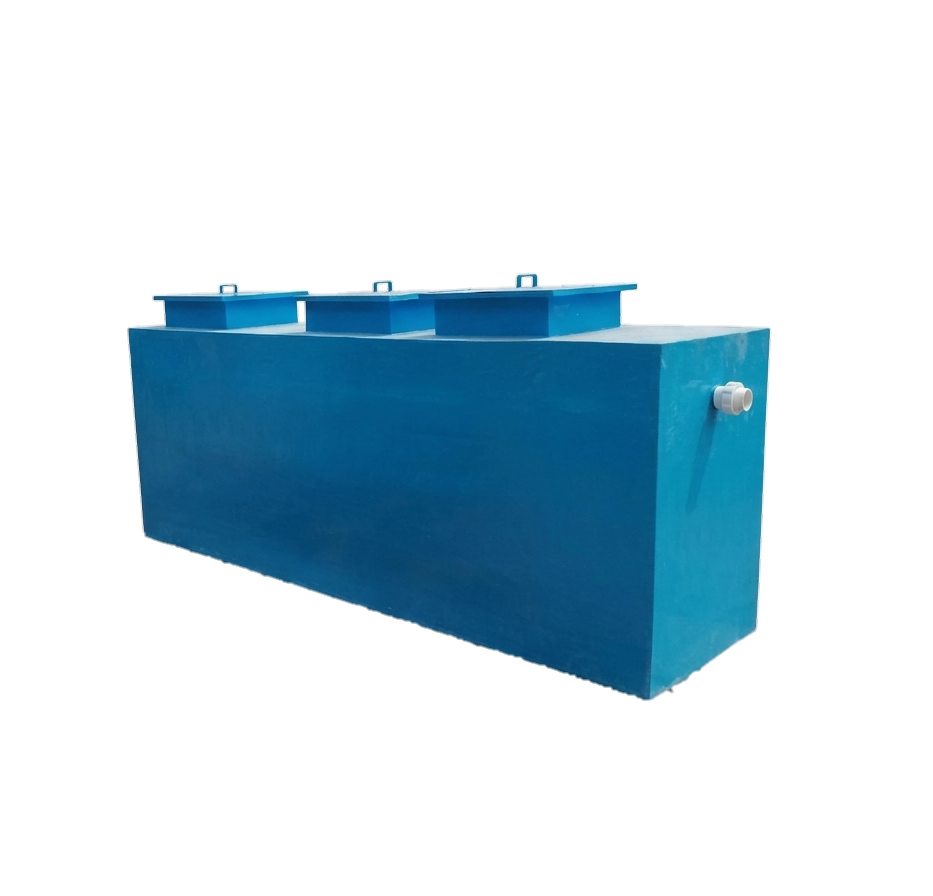 Grease Trap